“And whatever you ask in prayer, you will receive, if you have faith” (Matt 21:22). In this passage we see how generous our Lord, Jesus Christ, is with us. First, He tells us how to obtain what we ask – “in prayer” – and then He also instructs us what we should do for our hearts to be truly in prayer and receive what we ask for – “have faith”.
We can ask God for “whatever” – there is no limit to what we can ask God. Although there is no limit, for nothing is beyond God’s power and “everything is possible with God” (Matt 19:26, Luke 1:37), there are two conditions that God who is love (cf. 1 John 4:8) asks of us when we ask something of Him (how personal and intimate He is with us!).
The first condition is that we ask whatever our hearts desire “in prayer”. Ah, prayer, the language of love, the action of love. St. Charles de Foucauld in his meditations wrote that “when one loves, one longs to be always in converse with him one loves, or at least to be always in his sight. Prayer is nothing else.”
What can we do in this world but to pray for one another? Nothing, nothing at all. Prayer is the ultimate manifestation of love for one another. Sure, if we can help materially each other, we most certainly should do that immediately – but that too is prayer! However, when distance separates us, alone in our rooms, in the silence of a heart in love (not “fallen” in love, but willfully, awake, risen in love) what can we do?
We can kneel, silence our minds as much as we can, turn our hearts towards the Eternal Eyes of God, and in that stillness that is nothing else but a living fragment of eternity, we say the words our Saviour taught us: “Our Father…” (Matt 6:9-13). As such, in prayer, we can never ask something just for ourselves – there is no “I” in the Church; He is our Father, not “my” Father.
Prayer, the language and act of love, always acknowledges the other. If we pray just for ourselves, are we really in prayer? When we ask the Lord’s help with this or that, do we truly not think of the bigger good that encompasses another person or persons?
No matter the distance then, by praying for one another, we can do much. Indeed, as St Charles de Focauld said elsewhere, by prayer we can do anything (“whatever”!). When we pray, we give up to God, we offer to Him, the limited time that we have from Him. If we do this for him, or her, or them, do we not truly die a little for those people whom we mention in prayer? Are we not giving up part of our limited time to remember their names before Almighty God? Isn’t prayer a sacrifice in this sense?
God has loved us so much that He both prayed for us and suffered death for us. As St Thérèse of Lisieux wrote: “Only love can repay love”. Sometimes we are asked to make the final sacrifice for God or for others and to give up our whole lives for them then and there. These are acts of martyrdom. However, we can do this, bit by bit, in the quietness of our hearts when we pray for others. To sacrifice our lives for others, out of love for them, is highly commended by our Lord (cf John 15:13).
When we ask God for whatever in love (i.e. “in prayer”) that thing is good and pleasing to Him, because to love is to will the good of the other (and of ourselves). We cannot pray for something evil, that is for something that is against God’s will. As St Francis de Sales taught, we can know God’s will from His commandments to us (to love Him and one another) and from His counsels that are given to us to aid us in becoming more like Him. Prayer, the language and act of love, requires that we love. We cannot pray otherwise, no matter what words we use or what images we conjure in our minds.
Consequently, the first condition set out by Jesus, in line with His commandment that we should love one another as He has loved us (cf John 13:34-35, John 15:12), ensures that our ask is pleasing to the Father. Behold His generosity: God tells us to ask and how to do it!
The second condition is to “have faith”. Faith is hope in God (cf Heb 11:1). Faith is the assent of the soul to God’s existence and will (St John of the Cross). Faith is proof that the Holy Spirit, the giver of faith, dwells in our soul (cf Rom 10:17). Faith conquers the world (cf 1 John 5:4).
In other words, our Lord is asking us to ask anything in love, having hope in God. It was not sufficient for our Saviour to tell us how to ask for what our hearts desire, but to rest assure in Him who is Life and Love Eternal, because, as the Psalmist says, His “mercy endures forever” (Ps 136).
Faith, however, is a gift. It is not akin to blind trust, nor is it something we can imagine or reason our way into it. Faith is given – and is given to all, especially to those who ask for it, and most certainly to those who seek God truthfully.
As any gift, faith is free – freely given and, importantly, it must be freely accepted (just like love). Faith cannot be forced, and God so respects the freedom of His creatures that He never forces His graces. He liberally gives faith in so many forms: through nature, through another person, through inspirations, through His words recorded in the Scriptures, through the Sacraments. Man must respond. Will he accept this gift, of knowing Love Eternal?
We can therefore understand the message of our Lord with which we have started this meditation as such: Knowing who God is, ask whatever you desire in love and “you will receive”.
Jesus does not say when or how we shall receive what we ask in prayer with faith – because if we did ask for it in prayer with faith then we have the certainty that we shall receive.
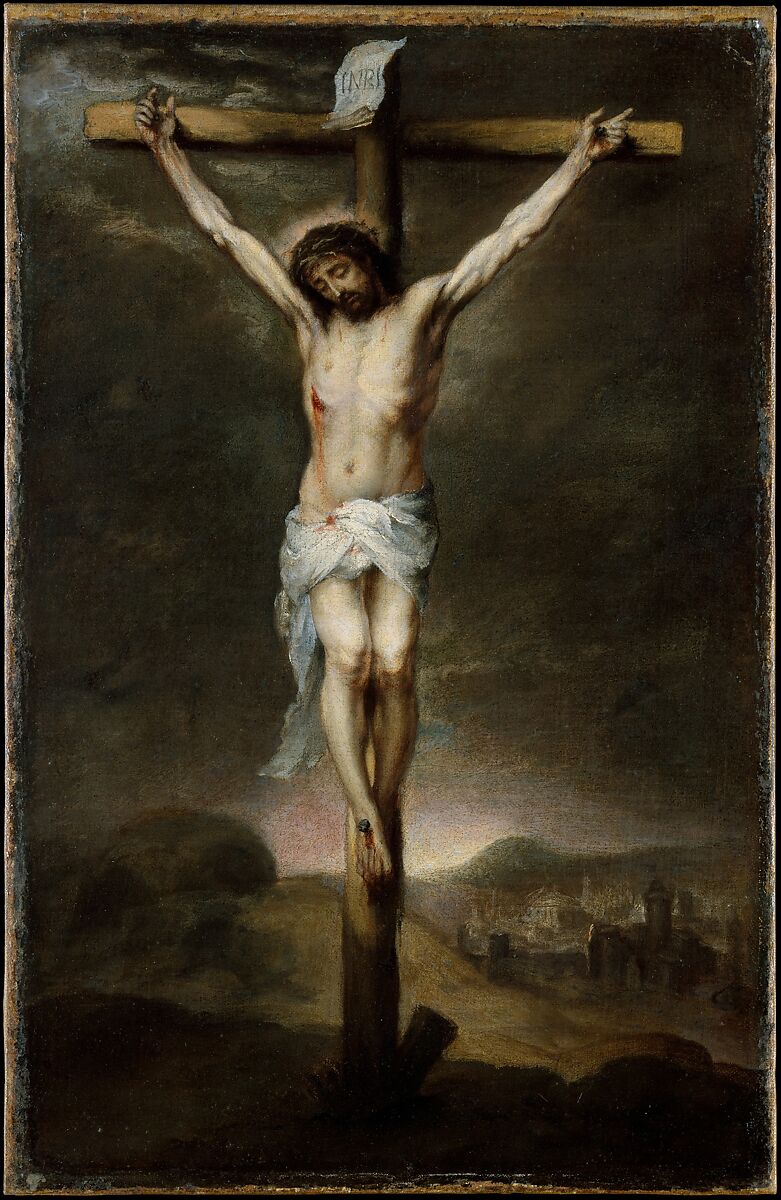
Image credit: Jean-François Millet, The Angelus, 1857-59
 Nihil Sine Deo