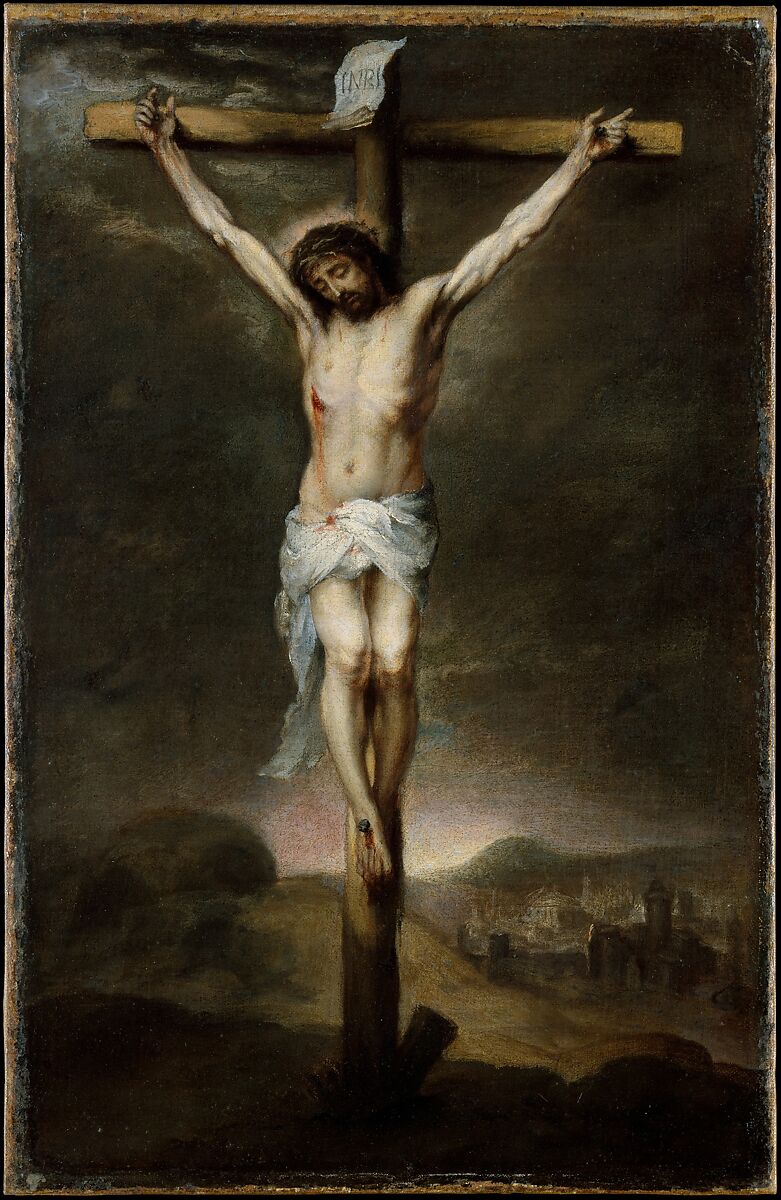
The title comes from John 17:24. It is part of the priestly prayer of Jesus for the Church. Our Lord is asking His Father that those who believe in Him may be with Him where He is, to behold His glory which God the Father has given Him in His love “before the foundation of the world”.
Those words echo a line from the Book of Proverbs: “before the beginning of the earth” (Prov 8:23). The New Testament completes this revelation by enlarging the majesty of Eternal Wisdom over all creation, signified by the word “world”, not just over the earth. This is possible because of Jesus Christ, the Word made flesh (cf John 1:14), “the wisdom of God” (1 Cor 1:24) having come to dwell among us.
Perhaps the author of the Book of Proverbs, being part of the Old Testament revelation, did not know that the wisdom of God is, in fact, the Wisdom of God, the Word of God who is God (cf John 1:1). Maybe for this reason we read: “The Lord created me at the beginning of his work, the first of his acts of old” (Prov 8:22).
Perhaps the writer of the line quoted just above knew that he was speaking of God Himself and not of a creature, but he was unable to express it properly in words: eternity can be understood imperfectly only by man, who is in time. For example, even St John, who rested his head on the breast of our Lord (cf John 13:23), when he wrote of the Word of God, he used a vocabulary of time to depict eternity: “In the beginning…” (John 1:1).
Perhaps the reason for tying together time and timelessness is to show how close God is to His creation: He who has no time, Who owns time, Who made time, and everything else that does have a beginning, a beginning out of nothing but God’s love, came in time to His creatures. Indeed, this appears so from the words of Wisdom Himself spoken through the author of the book of Proverbs, saying that He is “rejoicing in his inhabited world and delighting in the sons of men” (Prov 8:31).
Perhaps the use of language that denotes time was purposely used to denote that it is a creature speaking of the Creator; the language of man, even the words addressed to God (our prayers), passes through the “dimly” mirror of time (1 Cor 13:12): for us there is always a beginning.
“In the beginning was the Word” (John 1:1). “In the beginning God created the heavens and the earth” (Gen 1:1). “The Lord created me at the beginning of his work” (Prov 8:22). “I am the […] beginning and the end” (Rev 22:12).
- There is one “beginning” which refers to “before the foundation of the world” (cf John 1:1).
- There is one “beginning” which refers to “the foundation of the world” (cf Gen 1:1).
- There is one “beginning” which refers to the eternal through the eyes and understanding of man before Christ (cf Prov 8:22).
- There is one “beginning” which refers to the eternal through the eyes and understanding of man after Christ (cf Rev 22:12).
Image credit: Caspar David Friedrich, Dawn, undated
 Nihil Sine Deo